

Most Hot-Dip Galvanized Steel wire product failures traced to 'bad quality' were actually environment mismatches: humidity the seals did not expect, dust the cooling never planned for, voltage that wandered. An environment fit assessment costs a site walk and a datasheet. This guide provides the checklist.
Every product datasheet has two halves: the impressive numbers under ideal conditions, and the fine print that describes your actual week. Selection discipline means reading the second half first, and duty cycle ratings live precisely in that fine print.
The guidance is based on the experience of æ²³åèç¿é¢ç¼æéå ¬å¸ (www.suxiangsteelcable.com), which supplies hot-dip galvanized steel wire, automotive spring steel wire, galfan steel wire to customers worldwide.
Before choosing a product, define the application requirements. These factors determine everything else.
Duty cycle: how often and how hard the product will work.
Environment: temperature, humidity, dust, corrosion and exposure.
Regulatory requirement: the standards that apply in your market.
Interfaces: dimensions, connections and compatibility with existing systems.
Lifetime expectation: the service life you need before replacement.
Maintenance access: how easily the product can be serviced.
Budget versus total cost: the balance between purchase price and lifetime cost.
Hot-Dip Galvanized Steel Wire and related products are used in a wide range of settings. Understanding the demands of each helps match product to purpose.
Power Transmission: requires reliable performance and appropriate compliance, with duty cycles that vary by application.
Automotive Components: requires reliable performance and appropriate compliance, with duty cycles that vary by application.
Construction: requires reliable performance and appropriate compliance, with duty cycles that vary by application.
Fencing: requires reliable performance and appropriate compliance, with duty cycles that vary by application.
Cable Making: requires reliable performance and appropriate compliance, with duty cycles that vary by application.
In each case the specification should be driven by what the application demands, not by what happens to be in stock.
Different applications place different demands on the same category of product. A configuration suited to light duty will fail quickly under continuous operation, while an over-specified product wastes money.
| Application | Duty Level | Key Requirement | Specification Focus |
|---|---|---|---|
| Light duty | Intermittent | Basic reliability | Standard configuration |
| Medium duty | Regular | Consistent performance | Reinforced components |
| Heavy duty | Continuous | Durability and serviceability | Premium materials |
| Critical duty | Continuous, safety-relevant | Redundancy and compliance | Certified, monitored systems |
Ask the supplier to recommend a configuration for your specific duty level rather than defaulting to the cheapest option.
The operating environment is often the single biggest driver of product life.
Temperature: extreme heat or cold affects materials and lubricants.
Humidity and moisture: drives corrosion and electrical risk.
Dust and particulates: accelerates wear and blocks ventilation.
Corrosive atmospheres: requires specific material grades.
Vibration and shock: demands robust mounting and fastening.
Specify the environment explicitly. A product that performs well in a clean workshop may fail outdoors or in a chemical plant.
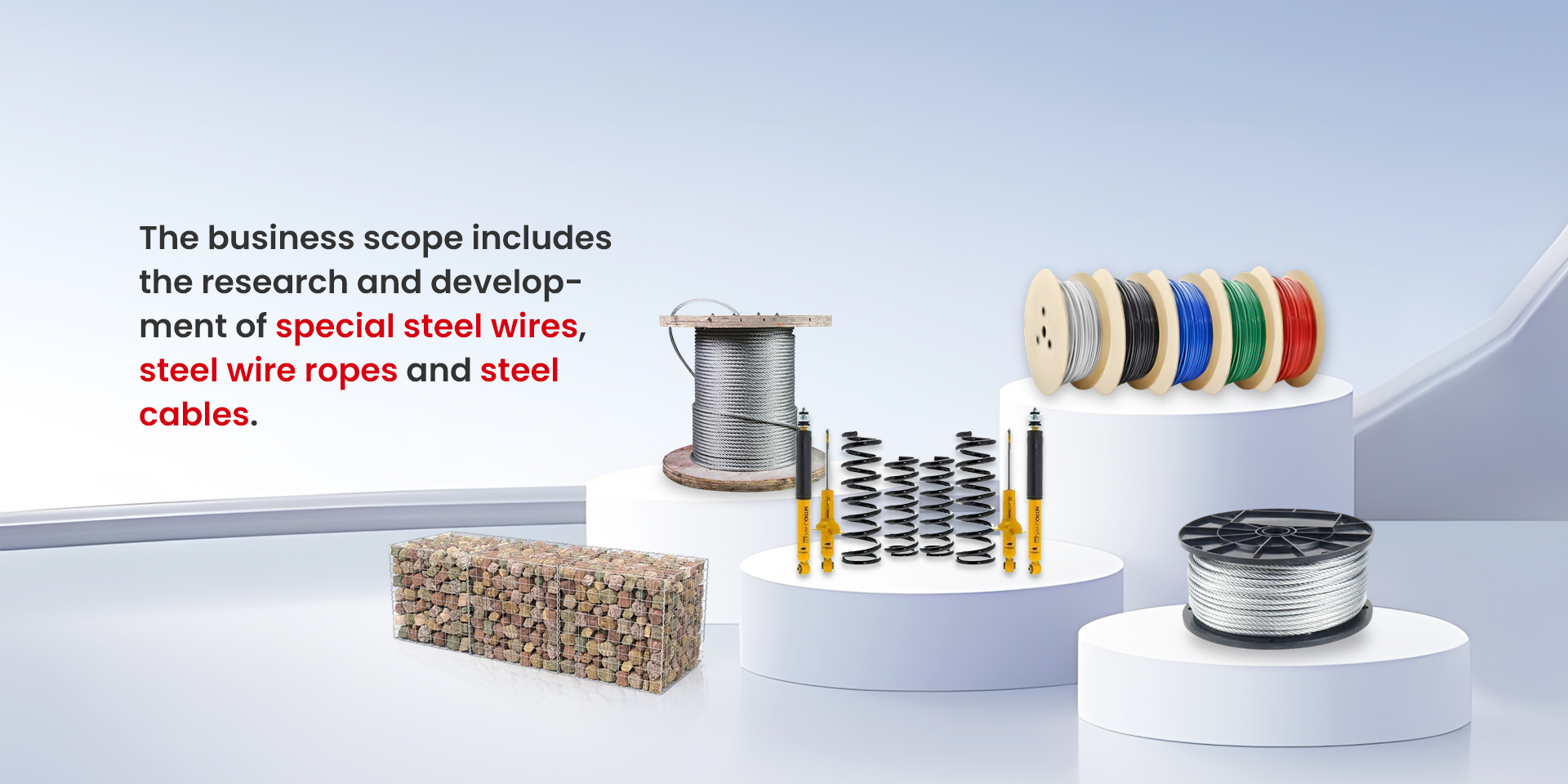
A good specification is unambiguous. It states the requirement, the conditions, and the acceptance criteria.
State the application and duty cycle.
List the environmental conditions.
Define the performance requirement.
Specify the applicable standards.
State the interface and dimensional requirements.
Define the acceptance criteria and documentation.
State the packaging and delivery requirement.
When two suppliers quote very different prices, it is usually because they interpreted the specification differently. Precision removes that risk.
Correct installation protects performance and warranty. Follow the manufacturer's instructions, verify the mounting and connections, and commission the system before full operation.
Ask for installation documentation and, where relevant, on-site support. A supplier who provides clear commissioning guidance reduces the risk of premature failure.
Lifetime cost is driven by maintenance frequency and the availability of spare parts. A product with a slightly higher purchase price but longer service intervals often delivers a lower total cost.
Confirm the recommended maintenance schedule, the availability of consumables and spare parts, and the expected service life under your duty cycle.
This matrix summarises how requirements change across applications and helps you position the product correctly.
| Application | Typical Duty | Environment | Regulatory Focus | Lifetime Priority |
|---|---|---|---|---|
| Industrial production | Continuous | Indoor, controlled | Safety standards | Uptime |
| Outdoor and field | Intermittent | Variable weather | Environmental standards | Durability |
| Process and utility | Continuous | Varies | Application standards | Reliability |
| Commercial use | Regular | Indoor | Product safety | Cost of ownership |
| Critical systems | Continuous | Controlled | Certified compliance | Redundancy |
Use the matrix to sanity-check a proposed configuration: if the product's rating does not match the duty and environment, it is the wrong choice even if the price is attractive.

Different applications invoke different standards. Confirm which apply to your use case and market.
ASTM A475: confirm applicability to your application and market.
EN 10244: confirm applicability to your application and market.
GB/T 343: confirm applicability to your application and market.
ISO 9001: confirm applicability to your application and market.
ISO 9001: request evidence of compliance where required.
ASTM A475: request evidence of compliance where required.
EN 10244: request evidence of compliance where required.
This sequence turns an application requirement into a delivered product.
Define the application and duty cycle.
List the environmental and regulatory requirements.
Write the performance and interface specification.
Request configurations from two or three suppliers.
Compare proposals against the specification, not against price alone.
Approve a sample and confirm the configuration.
Arrange installation and commissioning documentation.
Establish a maintenance and spare parts plan.
Duty cycle matching starts with measuring your own workload honestly â most operations overestimate peak demands and underestimate accumulated ones. The mapping below converts common duty descriptions into selection guidance:
| Your Real Usage | What to Ask For | Why the Brochure Peak Lies |
|---|---|---|
| Intermittent, under 2h/day, light loads | Standard duty rating is sufficient | Peak marketing hides thermal recovery limits |
| Regular shifts, 4â8h/day, mixed loads | Continuous-duty rating with service factor | Intermittent-rated units accumulate heat and fail late, expensively |
| Continuous, multi-shift, near-max load | Heavy-duty build plus spares plan and service contract | No consumer-grade unit survives this; buy up or fail often |
| Seasonal peaks over a quiet baseline | Standard build with planned rotation or oversizing | Sizing for peak wastes money; rotation preserves it |
The cheapest duty upgrade is operational, not commercial: a ten-minute usage log across two representative weeks gives you real numbers to compare against ratings, and suppliers' engineers engage far more precisely with logged duty than with adjectives. Bring the log to the conversation and the right model usually selects itself.
Start from the standard configuration and identify where your application demands something different. Customization should solve a specific requirement, not add cost without benefit.
Service life depends on duty cycle, environment and maintenance. The supplier should be able to state an expected life under defined conditions, and you should verify it against your duty level.
Temperature, humidity, dust and corrosive exposure are the most common drivers of premature failure. Specify them explicitly when requesting a quotation.
No. Over-specification increases cost without adding value if your application does not need it. Match specification to duty.
At minimum, a specification sheet, installation instructions and compliance documentation where applicable. For complex products, request commissioning guidance.
Very. A product that cannot be serviced quickly becomes a liability. Confirm the availability and lead time of critical spares before ordering.
Many manufacturers provide application support and interface guidance. Ask about the level of technical support included.
Normalise the specification, then compare on lifetime cost including maintenance and spares. A like-for-like comparison avoids misleading price differences.
Most sourcing crises are communication cadence failures wearing costumes: nobody agreed who reports what, how often, in which format, so the first real problem arrives as a surprise instead of a trend. The cadence below generalises across the steel wire and cable products category:
| Rhythm | Content | Why It Prevents Crises |
|---|---|---|
| Weekly during production | One photo line: progress vs plan, any exceptions | Problems surface at day 3, not day 30 |
| Per shipment | Document pack + loading photos before departure | Errors correctable before the goods sail |
| Monthly | Open-order status: dates, quantities, risks | Your planning works on facts, not memory |
| Quarterly | Scorecard review call with named actions | Small grievances get aired before they compound |
| Annually | Strategy conversation: capacity, roadmap, pricing direction | Both sides plan against the same future |
The cadence costs the supplier minutes and buys both sides months of forecast calm. Agree it at kickoff, put it in the order terms, and hold your own side to it as strictly as you hold theirs â cadence failures are rarely one-sided, and the buyer who goes silent between orders has forfeited the right to complain about surprises.

Field trials test the product; pilot cells test the product inside your operation, which is a different question with different failure modes. A pilot cell is deliberately small â one line, one shift, one site â and instrumented accordingly:
| Element | What to Define | What It Proves |
|---|---|---|
| Scope | One production cell or one route, bounded in advance | Results generalise to the rollout without argument |
| Duration | Two to four weeks covering full duty variety | Seasonal and shift effects surface |
| Metrics | Output, interruption, intervention counts vs incumbent baseline | The comparison is numeric, not narrative |
| Support | Named contact at the supplier during the window | Service response is measured, not promised |
| Exit criteria | Pre-written thresholds that trigger scale-up, hold or reject | The decision is made by the data you designed |
The pilot cell also tests integration assumptions that no sample ever touches: how the product fits the workflow around it, what the operators do differently from the manual, and where the interface friction lives. Rollout decisions made from pilot data are defended easily; rollout decisions made from enthusiasm are re-litigated forever.
A measurable share of 'product failures' in steel wire and cable products operations are training failures wearing product costumes, and the distinction is designable: specify what the operator must know for the purchased hot-dip galvanized steel wire product to perform as rated, then specify how that knowledge is delivered â manual language, video, on-site session, train-the-trainer â and verified. A competence checklist per role, signed after training, turns 'the team was briefed' into evidence. The ask costs suppliers little: they have trained operators before, and the materials exist. What it changes is the warranty conversation, because when a failure traces to untrained operation, the training record tells you whether the fix belongs to the supplier, your supervisor, or the specification that assumed skills nobody had.
Buyers track landed cost precisely and working capital loosely, which is odd, because the capital tied up between payment and sale is where importing actually strains. Map the stages once per programme:
| Stage | What Is Tied Up | Typical Duration | Lever |
|---|---|---|---|
| Deposit paid | Cash out, goods not started | 3â6 weeks | Milestone evidence before release |
| Production window | Deposit at risk, no goods to sell | 4â10 weeks | Weekly progress evidence |
| In transit | Balance paid or due; goods unsellable | 3â6 weeks sea, 1â2 air | Insurance, documentation accuracy |
| Customs and delivery | Duty and tax paid ahead of sale | Days to 2 weeks | Correct classification, pre-clearance |
| Receiving to shelf | Goods sellable but not sold | Your operation's number | Demand-linked order sizing |
The map's use is arithmetic honesty: a supplier whose price is 3% lower but whose minimum order ties up two extra months of stock may be the more expensive choice once capital cost is counted. Buyers who present this map internally also defend their order sizes better, because 'we ordered less' stops being timidity and becomes a capital decision with numbers attached.
Incoterms are quoted on every quotation and understood in fragments by most people quoting them. The working summary â the one worth keeping next to the PO:
| Term | Risk Transfers to Buyer | Buyer Should Verify |
|---|---|---|
| EXW | At the factory gate | Is export clearance and trucking actually arranged? Cheapest quote, longest to-do list |
| FOB | On board the vessel at origin port | Which port exactly; who books the vessel; the loading cut-off |
| CFR / CIF | When goods are on board (risk); costs differ | Insurance adequacy under CIF â cover is often minimum by default |
| DAP | At the named destination, before import clearance | Who clears import and pays duty â usually you |
| DDP | After import clearance at destination | Rare from origin suppliers; check the duty assumptions baked into the price |
Two habits prevent most incoterms disputes: name the exact place (not just the term â 'FOB' without a port is a negotiation) and align the term with who actually controls the freight. Buyers with a preferred forwarder buy FOB and control the booking; buyers without one often do better on CIF or DAP from a supplier with competent logistics â the right answer is organisational, not doctrinal.

Products retire, and so do their parts, and programmes that never asked 'what happens at end of life' meet the question as an emergency. The plan costs one page: for each product family, record the expected production horizon as the supplier states it, the last-buy options for parts, the equivalent successor model and its differences, and the stock strategy for the tail â the final years when demand outlives production. Ask the supplier in writing about discontinuation notice periods; twelve months is a reasonable ask, and suppliers answer it more concretely when the question arrives before the last order rather than after. Buyers who plan obsolescence convert retirements into managed transitions â successor qualification run in parallel, tail stock bought at production prices â while buyers who do not meet the same event as a crisis with a premium attached.
Working backwards: goods should be loaded one to two weeks before the holiday, production needs that again depending on scale, and materials need their own lead time â for most programmes this means confirming orders by early December for pre-CNY shipment. The factories that matter most to you are also the busiest then, so capacity is reserved by order date, not by intention.
Shrink the decision loops, not the production: approve samples faster, pre-book inspection slots, pre-clear documents, and release materials deposits on evidence rather than waiting for a weekly meeting. Production itself rarely compresses much; the administrative queue around it often hides two or three reclaimable weeks.
Convert everything to the same landed basis at your warehouse door, using your own forwarder rates for the legs each quote leaves open. The conversion takes minutes with a worksheet and removes the single most common source of false comparisons â the EXW quote that looks cheapest until its missing legs are priced.
Split by risk, not by dogma: consolidate where switching cost is low and volume earns priority, split where a single failure would stop your operation. The practical compromise most programmes land on is a primary with 70â80% and a qualified secondary holding the remainder â enough to keep the secondary warm and the primary honest.
Quotation, specification revision, golden sample record, PO, approvals, inspection reports, shipping documents, and the claim or concession correspondence â the full decision trail. Keep them for the product's service life plus the warranty period plus a year; quality disputes have long memories and short file retention, and only one of those is fixable in advance.
Once a year, review the sourcing programme as a whole rather than order by order: which suppliers earned growth and which coasted; which specifications produced disputes and need rewriting; where the freight calendar was beaten and where it beat you; what the year's claims, concessions and expedites actually cost in total. The output is a one-page reset â supplier actions, specification updates, calendar changes â issued to your own team and your top suppliers alike. Programmes without the post-mortem repeat the year with different dates; programmes with it compound small corrections into visible advantage, and the afternoon it costs is the cheapest consulting the programme will ever receive.
Risk registers have a reputation for theatre â long lists nobody reads â but a five-row register, reviewed quarterly, is a different instrument: it converts background dread into named, owned, dated items. The rows that matter for most steel wire and cable products programmes:
| Risk | Early Indicator | Mitigation in Place | Review Trigger |
|---|---|---|---|
| Single-source dependency | SKUs without a warm alternative | Qualified secondary, sampled twice yearly | Any supply interruption |
| Quality drift | Rising detection gap between factory QC and third-party findings | Scorecard trend review, PSI tightening | Two consecutive declining scorecards |
| Freight volatility | Spot rates moving against contract rates | Booking calendar, contract rate windows | Quarterly forwarder review |
| Regulatory change | Destination-market standard updates in force dates | Standards watch list per destination market | Annual compliance sweep |
| Supplier concentration in a region | Regional disruption news touching your lanes | Volume split across regions for critical families | Any regional event |
The register's value is the fourth column: pre-agreed triggers convert each risk from a mood into a decision point. Buyers who maintain one spend their worry on schedule, which is cheaper than spending it at two in the morning â and their programmes recover faster, because the mitigation was chosen calmly before it was needed.
Sourcing knowledge is stored dangerously: in one buyer's inbox, one manager's habits, one relationship's goodwill. Staff changes then cost more than the sum of re-reading emails â they cost re-learned lessons and reset relationships. The handover file prevents the reset, and it is genuinely one folder: supplier records with contacts and history, the golden sample register, specifications with revision dates, the scorecard archive, open commitments and promises made, the freight and customs documentation kits, and a one-page 'how decisions get made here' note. Update it quarterly, and the departure of any single person becomes an inconvenience rather than an event. The test of the file is brutal and simple: could a competent newcomer award the next order correctly using only what is written down? Suppliers can tell the difference between a programme with memory and one that starts over every two years, and they price accordingly.

Negotiation outcomes depend heavily on timing, and timing follows a calendar most buyers never draw. The annual rhythm that works:
| Window | Conversation | Why Then |
|---|---|---|
| Quarter end / year end | Volume commitments, annual pricing | Supplier targets are most movable against their calendar, not yours |
| Before the September peak | Freight contracts and booking strategy | Capacity is committed before the crunch reprices it |
| Novemberâearly December | CNY exit plan and pre-holiday orders | Late December asks meet closed factories |
| Spring soft season | Non-urgent volume, spec upgrades | Factory attention and capacity are at their most available |
| After each scorecard review | Corrective actions and relationship asks | Feedback is fresh and goodwill is concrete |
The calendar does not guarantee outcomes; it removes the self-inflicted losses â the price negotiation attempted in the pre-CNY crush, the capacity request raised after the peak was booked. Buyers who negotiate on schedule are also simply calmer negotiators, and calm reads as leverage even when nothing else has changed.
A year into the practices this guide describes, the programme shows signatures no single order can fake: the scorecard conversation runs both directions, because suppliers now bring their own numbers; quotations arrive with assumptions stated and validity dated, because the last three sloppy ones were returned; claims, when they occur, settle on documents within weeks; the second source is genuinely warm and the freight calendar is annotated a year ahead; and the annual post-mortem's one-page reset is already half-executed before the next year starts. None of these required a larger budget â they required the disciplines above, applied past the novelty period. If the signatures are absent at month twelve, the gap is rarely effort; it is usually that one upstream habit â the specification, the milestones, the cadence â was skipped, and the skip is findable in an afternoon.
The disciplines in this guide are not aspirations at æ²³åèç¿é¢ç¼æéå ¬å¸ â they are how we operate with long-term customers: specifications written to be checked, milestones tied to evidence, data packs produced per shipment, and a negotiation calendar we plan our own capacity around honestly. We would rather demonstrate the standard on a trial order than describe it in a brochure.
If you are building a new hot-dip galvanized steel wire programme, repairing one that has drifted, or planning volume across the year's capacity windows, send us your specification and your hardest constraint. You will receive a plan you can check line by line â and the measure of its quality is how few of its assumptions you need to remove.
If you are specifying steel wire and cable products for a particular application, æ²³åèç¿é¢ç¼æéå ¬å¸ (www.suxiangsteelcable.com) can help match the product to your duty cycle and environment. Visit www.suxiangsteelcable.com to discuss your requirement and request a specification proposal.

 Telepono sa Landline+86-513-85100011
Telepono: +86 13585223056
 E-mail:hangtong@nthangtong.com
vicky@nthangtong.com
 Address: No. 508, Guangxing Road, Baishan Town, Bo'ai County, Jiaozuo City, Henan Province
Copyright © Henan Suxiang Steel Cable Co., Ltd
Gumagamit ang website na ito ng cookies upang matiyak na makukuha mo ang pinakamahusay na karanasan sa aming website.
 English
 Español
 한국어
한국어 العربية
 Tiếng Việt



 Telepono
Magkomento
(0)